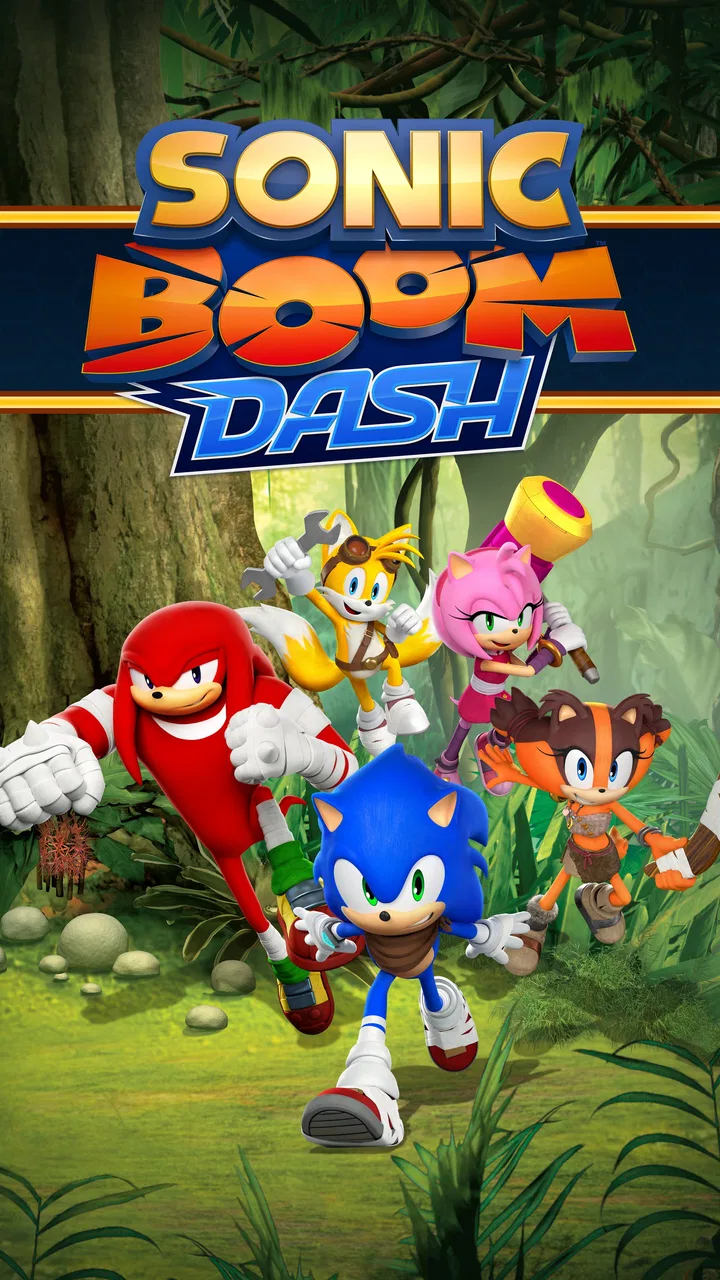
Sonic Boom Dash
- 4.4
- Rating
- 100.00M
- Installs
- Free
- Price

 Analysis by App-foxy
I came to Sonic Boom Dash expecting a quick arcade game, and that is exactly where it works best: short bursts of movement, immediate reactions, and a constant need to watch what is coming next. It is a free game from SEGA for Android and iOS, built around racing through colorful 3D spaces while avoiding hazards that can interrupt a run. After spending time with it, I see the appeal clearly. It is easy to start, familiar enough for Sonic fans, and demanding enough to make a failed attempt feel like a challenge rather than a dead end.
At the same time, this is not the kind of game I would recommend to everyone. Its strongest qualities are quick sessions and simple controls, while its weaker side appears when you want deep long-term variety, a calm experience, or a completely frictionless free-to-play structure. The game is free to download, but purchases range from $0.99 to $99.99 per item, so anyone sensitive to spending pressure should approach it with a clear limit in mind.
How the running experience feels in everyday play
The basic attraction is easy to understand. Sonic moves through a three-dimensional course, and I have to react to obstacles before they turn a promising run into a stumble. That makes the game suitable for small gaps in the day: a bus ride, a short break, or a few minutes while waiting for an appointment. I do not need to prepare for a long story sequence or remember a complicated control scheme before playing.
You May Also Like

 Blood Strike: 2.5 Anniversary
Blood Strike’s Loadouts Turn Every Drop Into a Tactical Gamble
A close look at Blood Strike’s custom loadouts: how fast access to signature weapons reshapes its battle royale rhythm, rewards preparation, and narrows the gap between fights.

 Pandora - Music & Podcasts
Pandora’s Music Is Easy to Start, but Harder to Recover
Pandora’s strength is its low-effort path from a seed to a station. Its weak spot is how much confidence it asks you to place in connection, setup, and quiet recovery.

 8 Ball Pool
 Is Built on Rivalries, Rematches, and Routine
A close look at the rivalries, rematches, shared routines, and unanswered safety questions that turn a quick pool match into a persistent mobile community.

 Samsung Music
’s Quiet Strength Is Playing What You Already Own
Its reach comes less from spectacle than from dependable access to a personal library. That simplicity is both the app’s strongest retention engine and its ceiling.

 AccuWeather: Weather Radar
AccuWeather Review: A Quick, Clear Forecast for Everyday Decisions
For everyday plans, the best forecast is the one you can understand quickly. AccuWeather makes rain timing, radar, and local conditions easy to act on, with a few trade-offs.

 Hill Climb Racing
Why Hill Climb Racing Still Turns Crashes Into One More Run
A tiny car, a bumpy hill and one more upgrade: Hill Climb Racing keeps resurfacing because its simple chaos makes every near-miss feel personal.
More From Our News Desk
View All News


That convenience is also the reason the game can become repetitive for some players. The moment-to-moment action asks for attention, but the overall loop is intentionally focused. If you enjoy improving your reactions and trying to survive longer, the format has staying power. If you need exploration, dialogue, puzzle solving, or a large set of different activities, this narrow arcade design may feel limited after the initial excitement.
I found the best way to approach it is as a game of attempts rather than as a conventional adventure. A run is not wasted simply because it ends early. Each mistake tells me which kind of obstacle caught my attention too late, whether I was moving too quickly, and whether I was watching the path ahead instead of reacting only to what was directly in front of Sonic. That mindset makes the repeated structure more enjoyable.
Controls that reward attention rather than planning
The appeal comes from immediate decisions. I am not building a complicated strategy several minutes ahead; I am reading the course and responding in the moment. This makes the game approachable for younger players and casual users, which fits its Everyone content rating. It also means that concentration matters more than a large amount of prior knowledge.
For a new player, I would avoid trying to play at maximum speed immediately. The useful early habit is to watch the space beyond the next obstacle. Looking only at Sonic makes hazards feel sudden, while looking farther along the route gives me a little more time to decide. That is a small adjustment, but it changes the experience from random-looking failure to a test of visual timing.
Another practical tip is to treat each attempt as a short training session. Instead of restarting with the sole goal of beating a previous result, I focus on one improvement: recognizing a particular obstacle, keeping a steadier line, or staying calm when the course becomes crowded. This approach is especially helpful on a phone, where a rushed touch can be caused as much by impatience as by difficulty.
Progress can be motivating, but it can also create pressure
Arcade games often depend on the desire to make one more attempt, and this title understands that rhythm. A near-success can be more motivating than an easy win because I immediately see how a better reaction might improve the next run. The danger is that the same loop can encourage spending or extended play when I am chasing a result rather than enjoying the game.
Because the game is free, I would decide before playing whether I am comfortable treating purchases as optional entertainment or whether I want to spend nothing. The available in-app items cover a wide range, from $0.99 to $99.99 each. That difference is important: a small occasional purchase and a high-priced item are very different decisions, even though both appear inside the same free game.
I do not think a player should assume that buying something will automatically make the experience more satisfying. In a reaction-based arcade game, part of the pleasure comes from learning the timing personally. If a purchase reduces the feeling of earning progress, it may solve a short-term frustration while weakening the reason to keep playing. My advice is to play long enough to understand whether the core running loop is enjoyable before considering any optional spending.
For families, the age rating makes the game broadly accessible, but that does not remove the need for sensible purchase controls on the device. A child may understand the running challenge without understanding the difference between a small virtual purchase and a much larger one. I would set a clear household rule before handing over the phone, rather than relying on a child to judge the value of every item alone.
What makes the challenge feel fair
The game works best when I accept that mistakes are part of the design. Obstacles are there to interrupt an otherwise smooth run, and success depends on noticing them early enough to react. That creates a fair competitive foundation: a player who improves observation and timing has a meaningful advantage over a player who simply taps quickly.
Still, fairness in a free-to-play arcade game has two sides. There is the fairness of the course itself, and there is the fairness of the surrounding spending environment. I can judge the first through play, but I would not confuse an easier progression path with better personal skill. If optional items help reduce frustration, then players who spend may experience a different level of pressure from players who do not.
For that reason, I would compare my own results mainly with my previous attempts instead of treating every score as a pure comparison between equally equipped players. This is a useful distinction for anyone who enjoys competition. If your satisfaction depends on a completely level field where purchases cannot affect the experience, a traditional paid arcade game or a simpler offline alternative may suit you better.
On the other hand, if you mainly want a recognizable character, quick action, and a reason to replay a course, the free entry point is valuable. You can test the controls without committing money first. That makes the game easier to recommend to a curious friend than a title that requires payment before you know whether its pace feels comfortable.
Where it fits beside other arcade choices
Compared with slower puzzle games, this one asks for faster visual decisions and offers less time to think. Compared with story-driven platformers, it gives up narrative depth in exchange for repeatable runs. Compared with traditional console-style Sonic adventures, the focus is narrower: the pleasure is in surviving and improving the run, not in exploring a large world at your own pace.
That narrow focus is not automatically a weakness. I often prefer a game like this when I have only a few minutes and do not want to remember a mission, search for a destination, or wait through a long setup. It is also a good choice for someone who likes reflex challenges but does not want a complicated ruleset.
I would skip it if my main goal were a substantial single-player journey. I would also look elsewhere if I dislike repeating similar attempts, if quick reactions are uncomfortable on a touchscreen, or if the presence of in-app purchases makes a free game feel less relaxing. A paid game with a fixed price may be the better value for that kind of player, even if it offers fewer instant sessions.
Device expectations and practical questions
The listed minimum operating system is Android 6.0, which places the game within reach of many older Android devices. That does not guarantee identical performance on every phone, so I would still pay attention to how smoothly the game responds on the device being used. In a game built around timing, even a small feeling of delay can make an obstacle seem unfair when the real issue is the hardware or the way the game is running.
The current version is 3.19.1. For a player deciding whether to install it, that is useful context because the experience is an actively versioned mobile game rather than a one-time release left untouched. I would keep the app updated through the normal platform process, especially if a control or performance issue appears, but I would not treat a version number by itself as proof that every personal problem will disappear.
The game was released on October 15, 2015, and its continued visibility is reflected in its scale: it has passed 100 million installs. Its average rating is 4.4 from around 762 thousand ratings, with roughly 26 thousand written reviews. Those figures suggest a broad audience and a generally positive reception, but they do not replace personal testing. A player who dislikes endless arcade repetition can still have a poor fit even when many others enjoy it.
I also would not choose it solely because it carries the Sonic name. The character helps the game feel familiar, but the important question is whether I enjoy this particular running format. Fans who want Sonic’s personality and speed in a compact mobile session may be pleased. Fans looking for the fuller platforming structure associated with other Sonic games should keep their expectations focused on arcade replay rather than a complete console-style experience.
Spending decisions and the information I would want first
The purchase range is clear enough to justify caution, but it does not tell me everything I would want to know before spending. I would want to understand exactly what each item changes, whether it affects convenience or performance, and how much of the game remains satisfying without buying anything. Those are practical questions because the value of a purchase depends on the player’s goal, not just the price shown on the button.
My own rule would be simple: play for free first, decide whether the basic loop holds my attention, and set a firm spending ceiling before making any purchase. I would never buy an expensive item while frustrated by a failed run. That is the moment when the game’s repeat-attempt design can make a quick decision feel more urgent than it really is.
This is also where the game may not be right for users who want complete certainty about costs before they begin. The free download makes trying it easy, but optional purchases mean the overall experience depends partly on personal discipline. Players who prefer one clear payment and no further decisions may feel more comfortable with a premium arcade title.
My trust verdict after playing
I see Sonic Boom Dash as a straightforward mobile arcade game with a strong use case: short, energetic sessions built around avoiding obstacles and improving reactions. SEGA gives it a recognizable identity, while the simple running format makes it approachable without a long tutorial or a heavy commitment. Its Everyone rating also makes it broadly suitable as a casual family game, provided adults handle purchase settings responsibly.
The limitations are just as important. The repeated run structure will not satisfy players searching for story or broad exploration, and the in-app purchase range means free access should not be confused with a fully fixed-cost experience. I also think competitive-minded players should separate personal skill from any advantages that optional spending may provide, rather than assuming every result represents the same conditions.
My recommendation is therefore conditional but positive. Try it if you want a recognizable character, fast touchscreen arcade action, and a game that fits naturally into spare minutes. Begin without spending, learn whether the obstacle timing feels fair on your device, and judge the game by how much fun the basic run provides. The best reason to keep playing is improved control, not pressure to purchase. If that kind of self-directed challenge sounds appealing, this free SEGA release is worth a place on your phone; if you want a complete adventure or a guaranteed no-purchase environment, another arcade option will be a better match.
FAQs for Sonic Boom Dash
01What is Sonic Boom Dash?
Sonic Boom Dash is an exciting endless runner game where players control Sonic the Hedgehog as he speeds through various levels. The game features vibrant graphics, engaging gameplay, and a variety of power-ups and obstacles. It's available for both Android and iOS devices, providing a fun and fast-paced gaming experience.
02What are the main features of Sonic Boom Dash?
Sonic Boom Dash offers a variety of features, including multiple characters to choose from, unique power-ups, and dynamic levels. Players can enjoy daily challenges, compete with friends on leaderboards, and unlock new abilities as they progress. The game also boasts stunning 3D graphics and a captivating soundtrack.
03Is Sonic Boom Dash free to play?
Yes, Sonic Boom Dash is free to download and play. However, it does offer in-app purchases for players who wish to enhance their gaming experience. These purchases may include additional characters, power-ups, and other cosmetic items. It's important to manage in-app purchases to avoid unexpected charges.
04What are the system requirements for Sonic Boom Dash?
For Android users, Sonic Boom Dash requires Android version 5.0 and up. iOS users will need iOS 11.0 or later. The game performs best on devices with at least 2GB of RAM and a stable internet connection, ensuring smooth gameplay and the ability to access online features like leaderboards and challenges.
05How can I contact support if I encounter issues with Sonic Boom Dash?
If you experience any issues with Sonic Boom Dash, you can contact the support team through the app's settings menu. There, you will find an option to send feedback or report problems. Additionally, the official website provides a support section with FAQs and a contact form for further assistance.
Pros
- Fast-paced gameplay keeps players engaged.
- Colorful graphics enhance visual appeal.
- Simple controls make it easy to play.
- Multiple levels offer varied challenges.
- Frequent updates add new content regularly.
Cons
- In-app purchases can be expensive.
- Advertisements interrupt gameplay.
- Requires constant internet connection.
- Some levels can be overly repetitive.
- Occasional lag on older devices.

Sonic Boom Dash
Gallery